
Supporting Children Through the Summer Holidays: Trauma-Informed Tips for Foster Carers
A gentle guide for foster carers from Three Circles Fostering
For many children, the summer holidays bring excitement, freedom and fun. But for children and young people in foster care, the move from school routine to summer holidays — and then back again in September — can also bring uncertainty, big feelings and changes in behaviour.
At Three Circles Fostering, we know that foster carers are often the safe, steady people helping children make sense of these changes. Whether you are caring for a child in the North West, Midlands or Yorkshire, the school holidays can be a wonderful opportunity to build trust, create memories and support emotional wellbeing.

They can also be tiring, especially when routines shift, family time arrangements change, school support pauses, or a child finds transitions difficult. This blog offers trauma-informed, family-friendly ideas to help children feel safer, calmer and more prepared during the summer break and the return to school.
Why transitions can feel difficult for children in foster care
Children who have experienced trauma, loss, neglect, separation or many changes in their lives may find transitions especially unsettling. Even positive changes can feel unpredictable. A child may not always be able to say, “I feel worried about what is happening next.” Instead, they might show you through behaviour.
You may notice:
Sleep difficulties
Clinginess or needing extra reassurance
Irritability, anger or emotional outbursts
Withdrawal or seeming “shut down”
Worries about contact with birth family
Anxiety about going back to school
Increased need for control
Changes in eating, toileting or routines
Big reactions to small changes
From a trauma-informed perspective, we try to ask: “What is this child feeling?” rather than “Why are they behaving like this?”
Behaviour is often communication. During transitions, children may need more predictability, more nurture and more connection — not less.
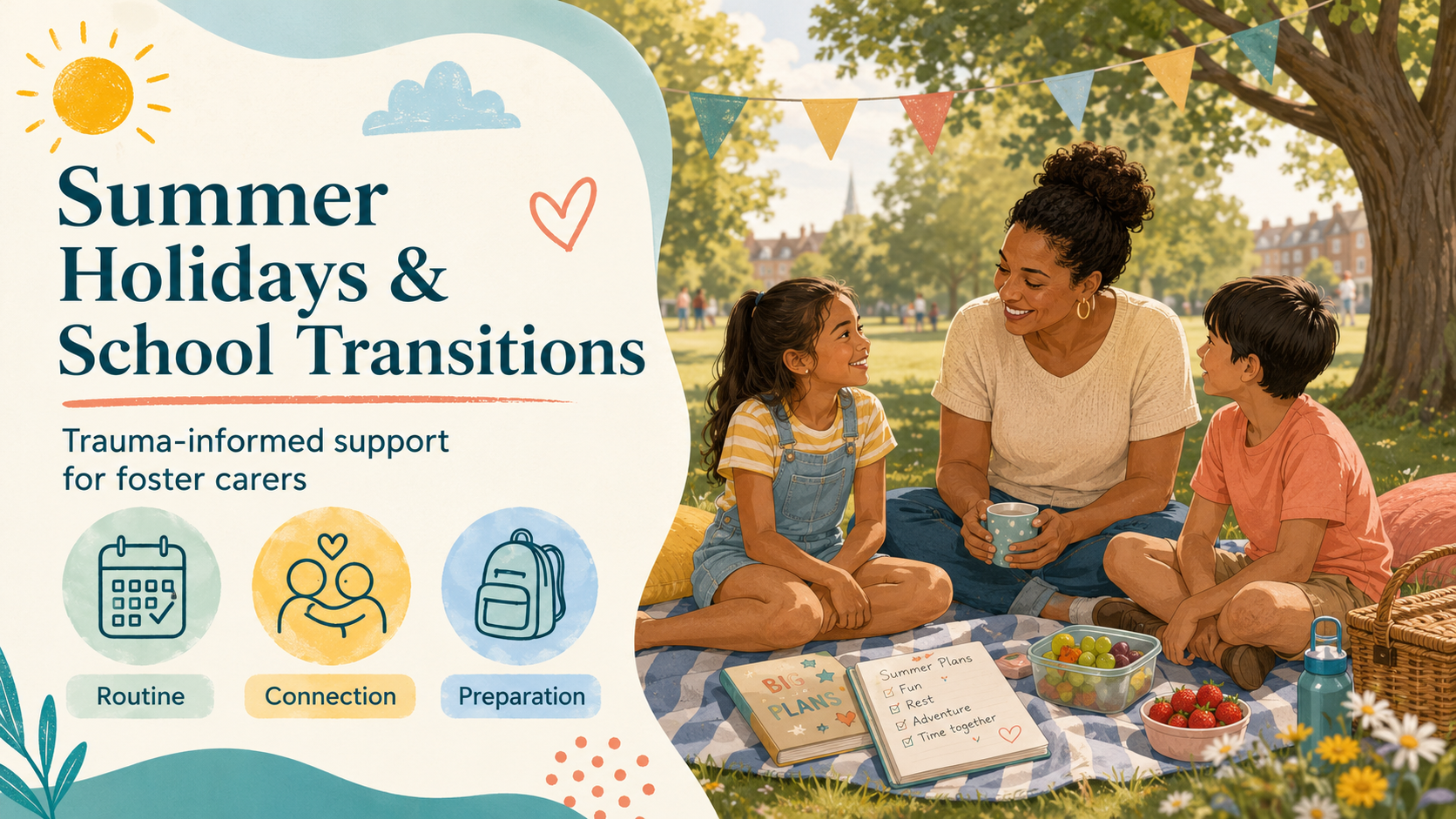
Moving from school routine to summer holidays
School can provide structure, familiar adults, meals, friendships and predictable expectations. When school stops, children may feel excited, but they may also feel a loss of safety and routine.
A helpful first step is to create a simple summer rhythm. This does not need to be rigid or packed with activities. In fact, many children in foster care benefit from a calm, manageable routine that allows space for rest.
Try a simple daily structure
You could include:
A similar wake-up time most days
Breakfast together where possible
A visual plan for the day
Outdoor time
Quiet time
One predictable activity
A bedtime routine that stays familiar
For younger children, a picture timetable can help. For older children and teenagers, a shared weekly planner on the fridge or phone can give them a sense of control.
A good phrase to use is:
“This is what’s happening today, and I’ll let you know if anything changes.”
That small reassurance can make a big difference.
Plan the week, but leave breathing space
It can be tempting to fill the summer holidays with trips, activities and days out. While these can be lovely, children who have experienced trauma may become overwhelmed by too much stimulation.
Instead of planning something big every day, try mixing:
Home days
Low-cost local outings
Time with trusted family and friends
Calm sensory activities
One-to-one time with a foster carer
Rest days after busy days
A busy day at a theme park, beach or family gathering may need a quieter day afterwards. This is not “spoiling the fun”; it is helping the child’s nervous system recover.
Summer activity ideas for foster families
You do not need expensive holidays to create meaningful memories. For many children, small, repeated moments of connection are what matter most.
Low-cost and local ideas
Picnic in the park
Visit a local library summer reading challenge
Nature walks or scavenger hunts
Baking together
Gardening or planting sunflower seeds
Swimming or splash parks
Bike rides or scooter time
Museum visits on free-entry days
Board games and film afternoons
Making a summer scrapbook
Creating a “memory jar” of good moments
Visiting local farms, canals, woods or country parks
Cooking a meal from a chosen country or culture
Building dens indoors or outdoors
Across the North West, Midlands and Yorkshire, there are many family-friendly places to explore, from local parks and museums to community events, libraries and nature trails. The best activity is not always the biggest one. Often, the best activity is the one where the child feels relaxed, included and safe.
Supporting contact and family time during the holidays
For some children, summer may bring changes to contact with birth family, siblings or other important people. This can stir up mixed emotions.
A child may feel excited before contact, unsettled afterwards, or both at the same time. They may also struggle if contact is cancelled, changed or feels unpredictable.
Foster carers can help by:
Preparing the child in advance
Using clear, age-appropriate language
Avoiding promises unless plans are confirmed
Offering comfort before and after contact
Allowing quiet time afterwards
Not pushing the child to talk immediately
Noticing behaviour as possible communication
You might say:
“Lots of feelings can come up before and after seeing family. You don’t have to explain it all now. I’m here with you.”
That message of safety and acceptance is powerful.
Helping children who struggle with unstructured time
Some children find school holidays difficult because there is too much open space in the day. Unstructured time can sometimes lead to anxiety, boredom, conflict or feelings of not knowing what to do.
A simple “choice board” can help. Include a mix of activities such as:
Read
Draw
Lego
Walk
Music
Baking
Puzzle
Garden
Call a trusted person
Watch a film
Help make lunch
Quiet time
Offering two choices can reduce overwhelm:
“Would you like to go to the park first or bake first?”
This gives the child some control while keeping the adult as the calm guide.
Preparing for going back to school
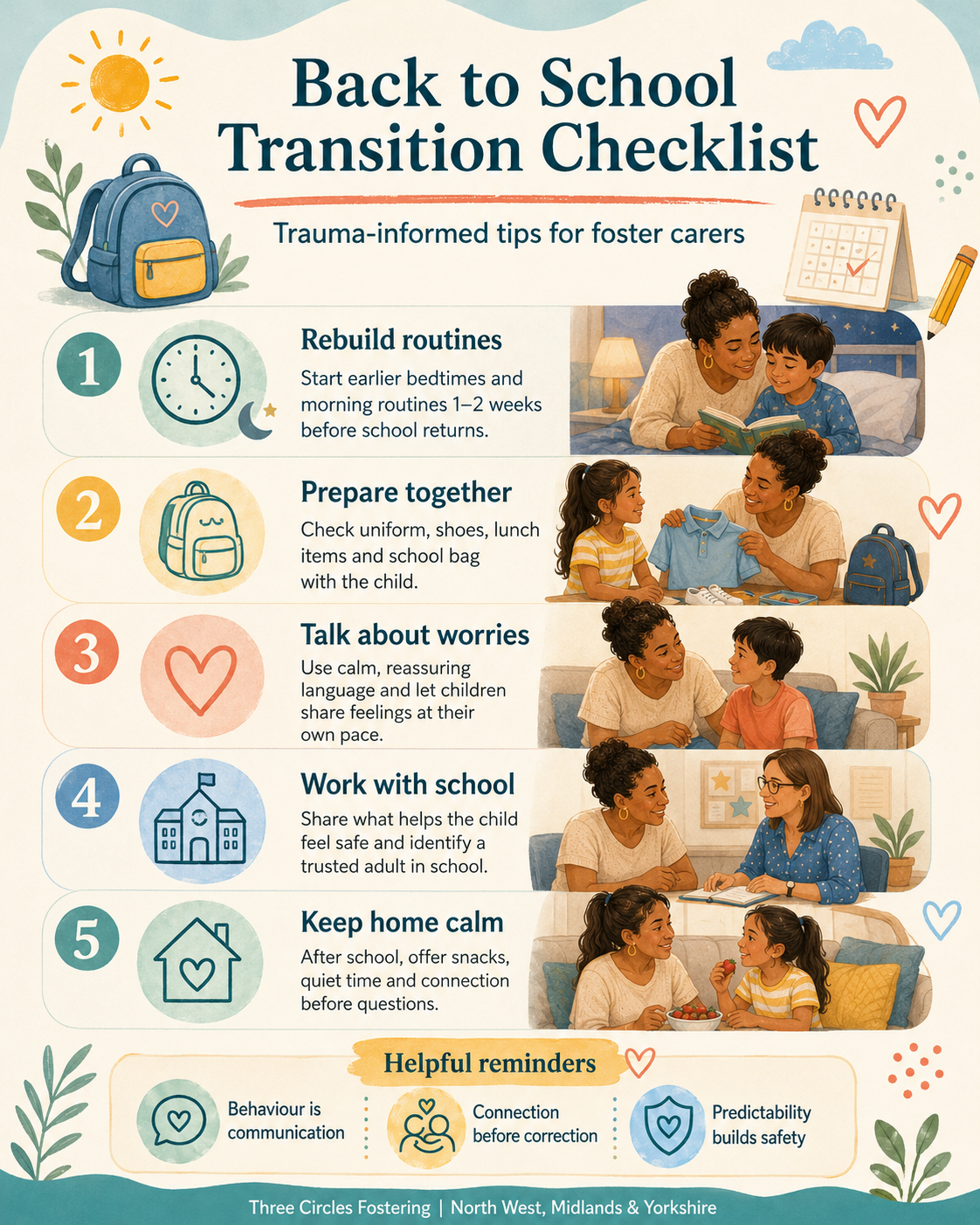
The return to school can bring another wave of emotions. Some children may worry about new teachers, new classrooms, friendships, uniform, homework, bullying, separation, or simply being away from the safety of home again.
Try to begin the transition gently before the first day back.
Two weeks before school starts
You could:
Slowly adjust bedtimes and wake-up times
Check uniform, shoes and bags together
Talk positively but honestly about school
Look at the school website or photos
Walk or drive past the school
Make a simple countdown calendar
Plan a calm activity after the first day back
Contact school if the child may need extra support
Avoid making the return to school sound too big or dramatic. For some children, too much focus can increase anxiety.
Instead of saying, “You’ll be absolutely fine,” try:
“It makes sense that you might feel nervous. We’ll take it one step at a time.”
Working with school as a team
Foster carers play a vital role in helping schools understand what a child needs. Before the new term, it can be helpful to contact the child’s teacher, designated teacher, SENCO, pastoral lead or virtual school contact.
You may want to discuss:
What helps the child feel safe
Any known triggers
Contact arrangements that may affect emotions
Sensory needs
Friendship worries
Transition plans
A safe adult or safe space in school
How school will communicate with you
Whether the child needs a soft start or check-in
A trauma-informed school plan does not need to be complicated. Sometimes the most helpful things are small: being greeted warmly, knowing where to go, having a trusted adult, or being allowed a quiet moment before learning begins.
After the first day back
The first few days back at school can take a lot of emotional energy. Some children hold everything together at school and release their feelings when they get home. This can look like tears, anger, silence or defiance.
Try not to plan too much after school during the first week. Offer food, quiet, connection and calm.
You might try:
A snack and drink ready at home
Time outdoors
A calm journey home
No immediate questions
A predictable tea-time routine
A bath or shower
Earlier nights
Gentle reassurance
Instead of asking lots of questions, try:
“I’m glad you’re home. You don’t have to talk about the day yet.”
Some children will talk later, perhaps at bedtime, in the car, while walking, or during an activity where eye contact feels less intense.
Trauma-informed reminders for foster carers
During summer holidays and school transitions, it can help to remember the Three Rs:
Regulate
Help the child feel calm and safe before expecting them to talk, learn or problem-solve. This might mean a drink, a snack, movement, quiet time, sensory play or sitting near you.
Relate
Connect before correcting. A warm tone, soft face, gentle humour or simple reassurance can help the child feel that you are on their side.
Reason
Once the child is calmer, you can talk things through, make plans and problem-solve together.
Children who feel safe are more able to manage change. Safety is built through repeated experiences of adults being predictable, kind and steady.
Recommended resources for foster carers
Here are some useful resources foster carers may wish to explore:
The Fostering Network
Helpful information and support for foster carers, including trauma-informed fostering, holidays, education and good practice guidance.
Beacon House
Fantastic resources available for free on their website - specifically around transitions.
YoungMinds
Helpful advice for parents and carers supporting children with school anxiety, emotional wellbeing and mental health.
Local libraries and council holiday activity programmes
Many local authorities offer summer activities, reading challenges and holiday programmes. These can be a great way to find low-cost, local and family-friendly activities.
Your supervising social worker
If you foster with Three Circles Fostering, your supervising social worker is there to support you. No foster carer should feel they have to manage challenging transitions alone.
Events and activities
We have lots of things going on at Three Circles including a family festival in Yorkshire and a family get together in the North West in August. Get in touch with your Supervising Social Worker to find out more!
Thinking about becoming a foster carer?
Summer holidays are a reminder of how much children need safe, caring adults who can offer patience, routine and belonging. Foster care is not about being a perfect parent. It is about being a reliable, nurturing person who can stand beside a child through ordinary days, difficult days and big transitions.
At Three Circles Fostering, we are a family-friendly fostering agency supporting foster carers across the North West, Midlands and Yorkshire. We offer training, guidance and ongoing support so our carers can provide the stable, therapeutic care children need.
If you have ever wondered whether you could foster, you may have more to offer than you realise. A spare room, a steady home and a caring heart can change a child’s life.
Whether you are already fostering or just beginning to explore fostering, Three Circles Fostering is here to help you take the next step.
Frequently asked questions
Why are school holidays difficult for some foster children?
School holidays can mean a change in routine, less structure, different contact arrangements and fewer familiar adults. For children who have experienced trauma or uncertainty, these changes can feel unsettling even when the holidays include fun activities.
How can foster carers support children during the summer holidays?
Foster carers can help by keeping routines predictable, planning activities in advance, allowing downtime, offering reassurance and noticing behaviour as communication. Simple routines and calm connection often make the biggest difference.
How can I help a foster child prepare for going back to school?
Start gently before term begins. Reintroduce bedtime routines, prepare uniform and school items together, talk about worries, visit or pass by the school, and speak to school staff about any support the child may need.
What should I do if a child becomes anxious about school?
Stay calm, validate their feelings and work with school and your supervising social worker. Anxiety is not “bad behaviour”; it is a sign the child needs support, safety and a plan.
Can I foster if I have not parented before?
Yes, many foster carers come from different backgrounds and family experiences. What matters most is your ability to provide safety, patience, warmth and commitment. A good fostering agency will offer training and support to help you develop the skills you need.
Final thought
The summer holidays do not have to be perfect to be meaningful. For children in foster care, healing often happens in small, repeated moments: a predictable breakfast, a calm bedtime, a walk in the park, a trusted adult remembering what helps.
With patience, preparation and support, foster carers can help children move from school to summer and back again with greater confidence, connection and security.
At Three Circles Fostering, we are proud to walk alongside our foster carers every step of the way.